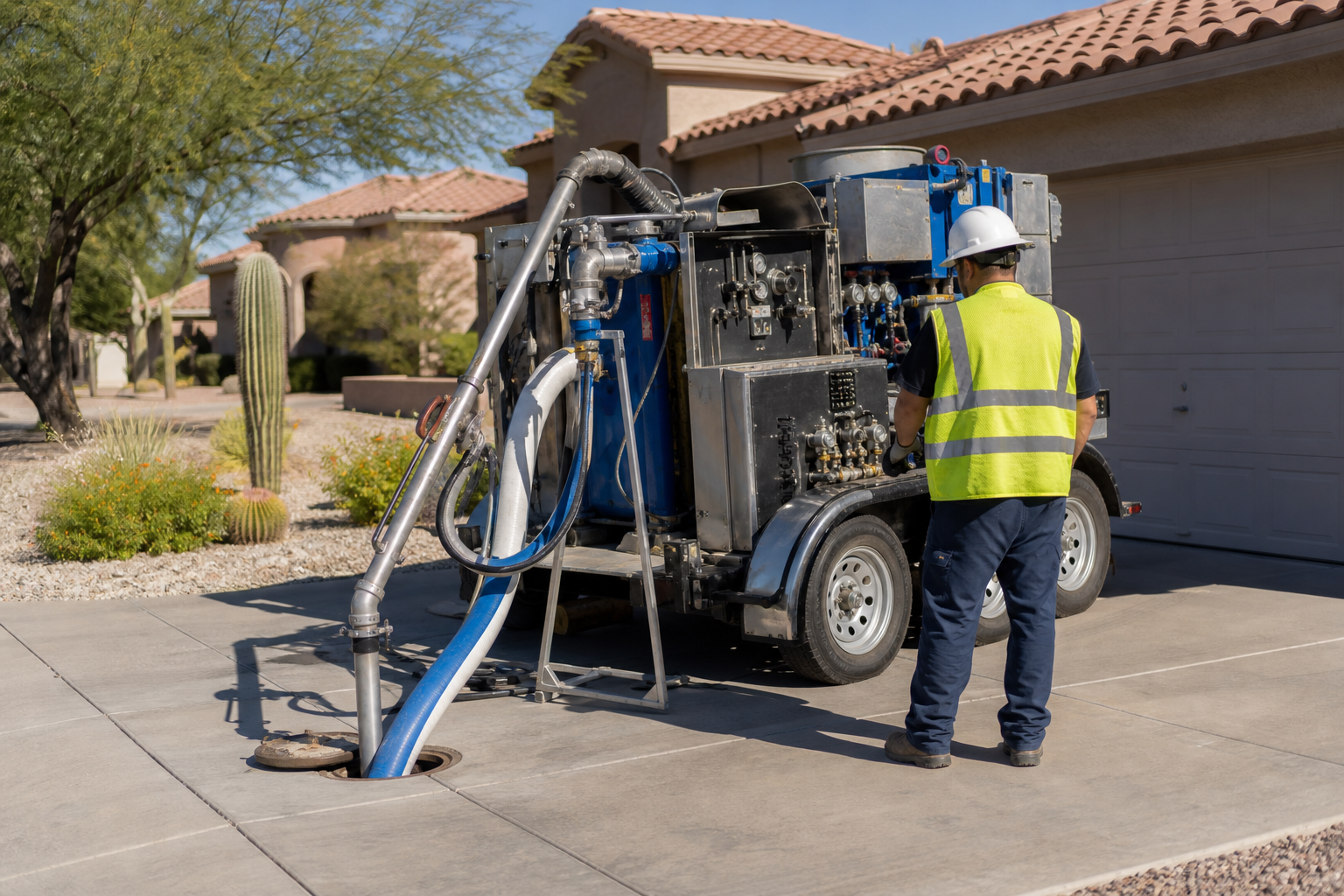
Trenchless Sewer Repair in Mesa, AZ
Fix pipes without tearing up your yard — pipe lining and pipe bursting.
Trenchless sewer repair is the option that changes the math on most residential sewer problems. The traditional picture of a sewer repair — weeks of torn-up landscaping, a driveway in pieces, a yard that looks like a construction site for a month — is what most Mesa homeowners expect when they call about a sewer line problem. The reality, for most failing laterals in good enough structural condition, is a CIPP (cured-in-place pipe) lining job that accesses the pipe from the cleanout, lines the full interior in a single continuous operation, and leaves the yard untouched except for the cleanout access points.
CIPP pipe lining works by inserting a felt liner tube pre-saturated with a two-part epoxy resin into the existing pipe through an access point. The liner is inverted (turned inside-out as it's pushed or pulled through the pipe) so the resin side ends up against the interior wall of the host pipe. Once it's in position, hot water or a UV light train cures the resin, hardening it into a rigid new pipe inside the old one. The finished liner seals every crack, every joint gap, and every root entry point in a single continuous tube — no joints for roots to re-enter, no gaps for water to infiltrate.
The liner material we use meets ASTM F1216 standards. It's rated for crush strength that exceeds the original pipe's specification, and it's certified for contact with sewage in residential and commercial applications. In Arizona's soil conditions — expansive clay, caliche layers, mineral-heavy groundwater — HDPE and epoxy materials outperform cast iron and clay over time because they don't corrode and they flex with soil movement instead of fracturing. A properly installed CIPP liner in a Mesa lateral is expected to perform for 50+ years without maintenance.
Not every pipe qualifies for lining. A pipe that has collapsed structurally — where the pipe cross-section is no longer round — can't be lined without first restoring the shape, which usually means spot excavation first. Pipes with severe belly (a low section where water pools and solids settle) may need the belly repaired before lining, because the liner will just conform to the deformed shape. We determine liner eligibility on the camera inspection. If your pipe qualifies, lining is almost always the right call. If it doesn't, we tell you that clearly and explain what the alternative is.
What's included
- CIPP liner meeting ASTM F1216 — full-length interior restoration from cleanout access
- Seals all cracks, joint gaps, and root entry points in a single continuous operation
- No excavation required beyond the access points — yard, driveway, landscaping untouched
- Finished liner exceeds crush strength of original clay, cast iron, or ABS host pipe
- Hot water or UV cure depending on pipe diameter and liner type
- Liner eligibility determined on camera inspection — no surprises
- Post-lining camera inspection confirms full coverage and proper cure
When trenchless lining is the right call
How CIPP pipe lining works
Camera inspection and liner sizing
We scope the full pipe length, measure the diameter, confirm the host pipe is structurally suitable for lining, and size the liner to the pipe.
Hydro jetting
Before lining, we jet the interior to remove all deposits, root debris, and scale. The liner needs to bond to a clean pipe wall.
Liner preparation and insertion
The felt liner is pre-soaked in epoxy resin and inserted through the cleanout access point, either by air inversion or pull-in-place depending on the run.
Cure
Hot water or UV light cures the resin, typically in 60–90 minutes depending on diameter. The liner hardens into a rigid new pipe bonded to the old one.
Post-lining scope
We camera the finished liner, confirm full coverage, check that the service connections are clear, and provide the footage as documentation.
Common questions
Is the lining permanent, or will roots come back?
The liner creates a continuous interior surface with no joints — there's nothing for roots to enter. Existing roots are killed when the pipe is hydro-jetted before lining. New roots from adjacent trees cannot penetrate an intact liner. The material is rated for decades of service.
How long does a lining job take?
A standard residential lateral is typically a half-day to full-day job: pre-jetting, liner setup and insertion, cure time, post-scope. There's no backfill or surface restoration required beyond cleaning up the cleanout area.
What if the camera shows my pipe isn't a candidate for lining?
We tell you that before we price anything. If your pipe has a structural collapse or a severe belly that rules out lining, we explain the situation and quote the open-cut or pipe bursting alternative.
Pipe under your driveway or pool deck? Root intrusion at every joint? Call Mesa Sewer Line Repair and we'll scope the line and tell you if CIPP lining is the right fix for your Mesa property.
Free Assessment
Camera scope with every diagnosis call. We tell you what's wrong before we quote.
(480) 351-4741Text UsOther Solutions
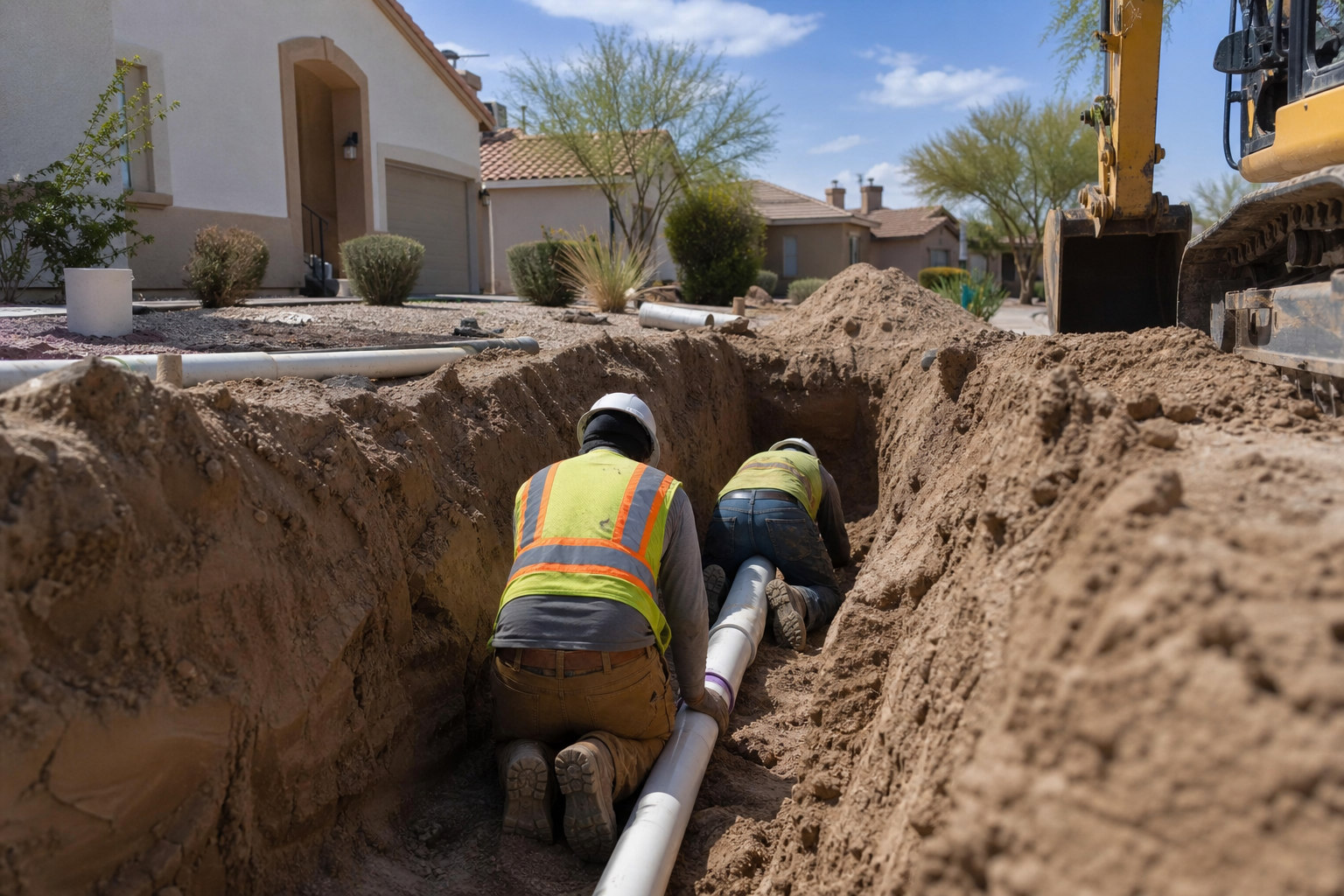
Need Sewer Line Repair in Mesa? Let's Fix It.
Mesa Sewer Line Repair responds to calls across Mesa and the East Valley. Camera inspection, same-visit diagnosis, and the equipment to handle whatever we find.