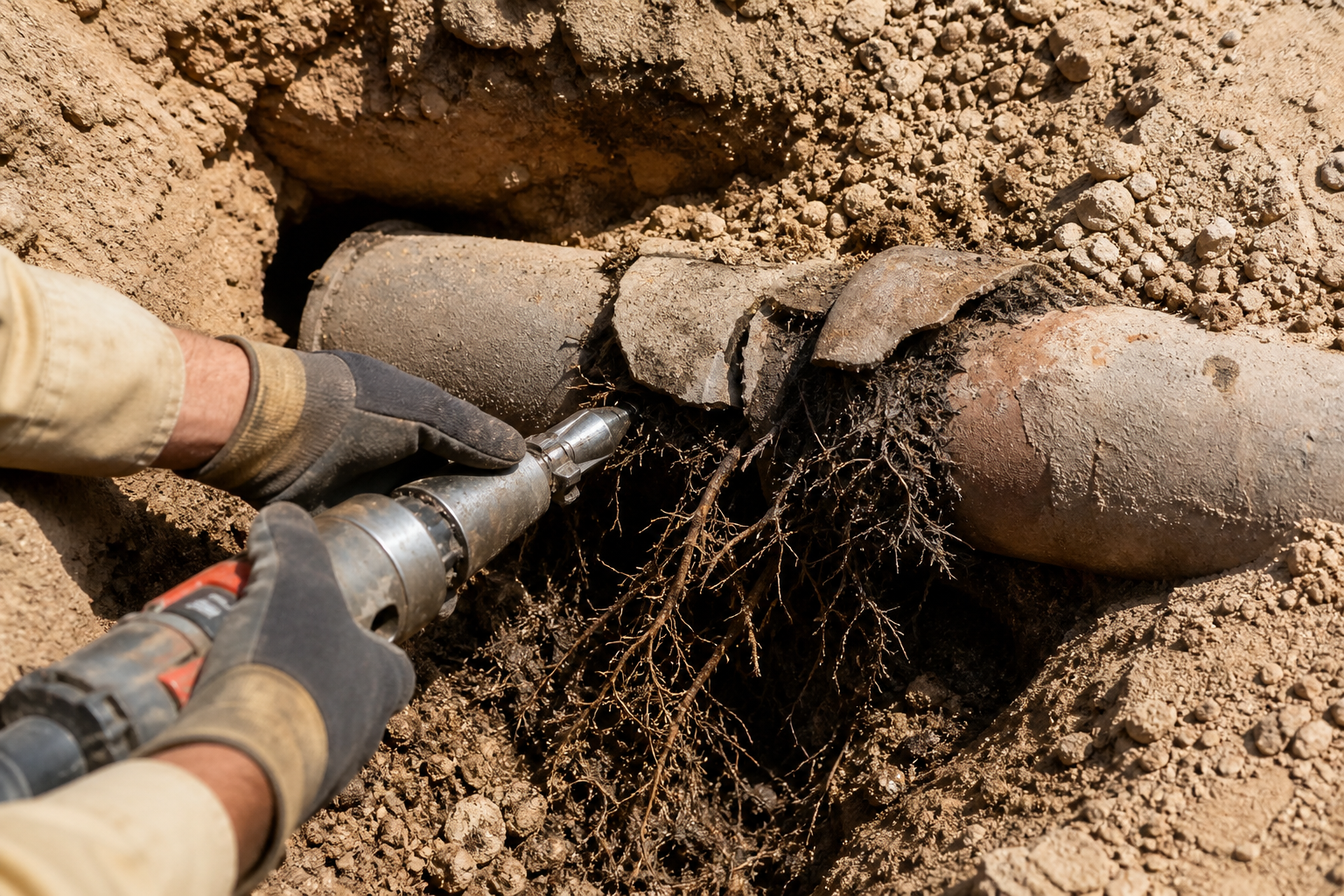
Root Intrusion Removal in Mesa, AZ
Tree roots invading your pipes? We cut them out and seal the entry points.
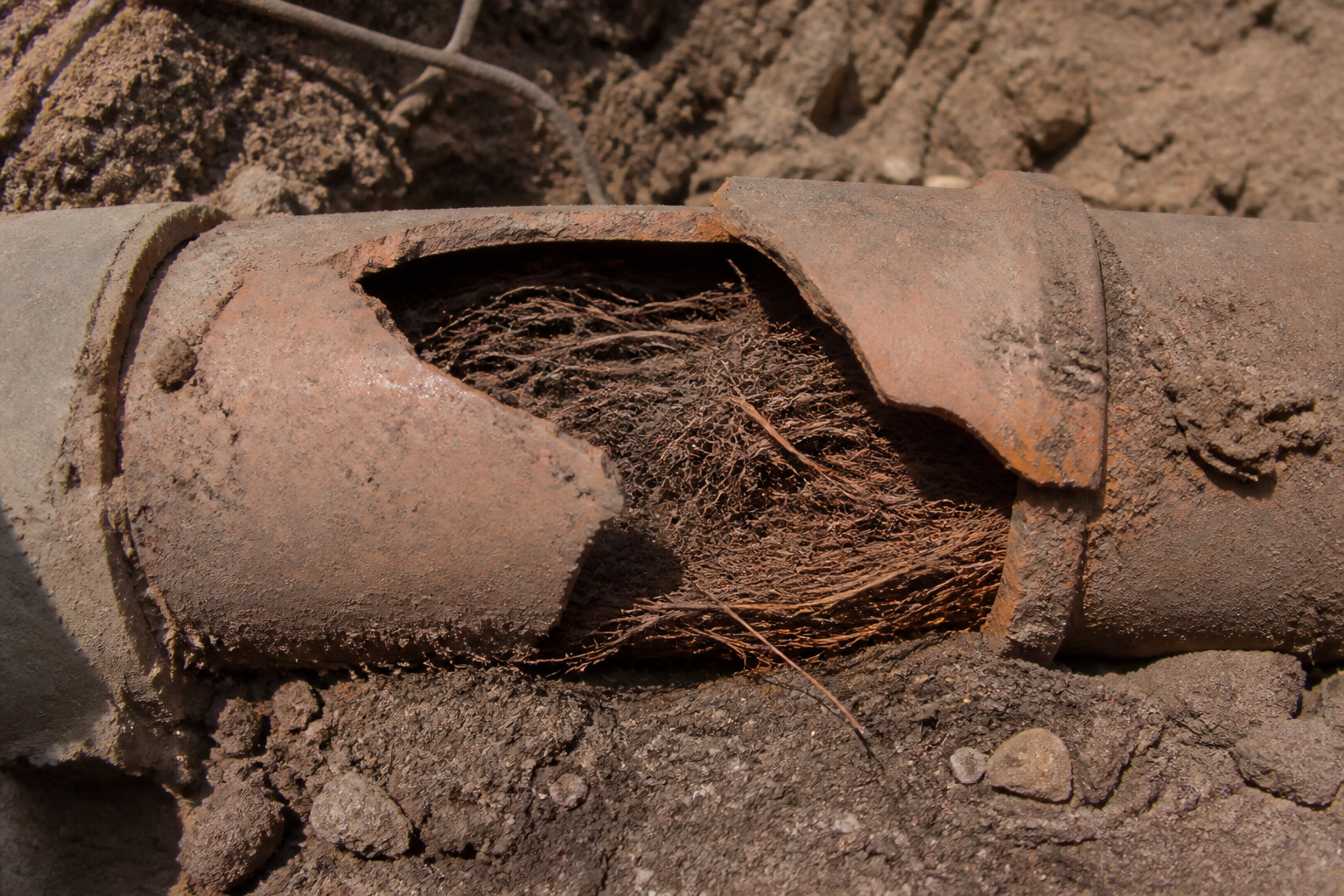
Root intrusion is the most common cause of sewer line failure we find in Mesa, and it's the one that property owners are most surprised by. The assumption is that roots break into pipes — that something solid forces its way through the pipe wall. That's not how it works. Roots enter pipes through existing gaps: the bell-and-spigot joints in clay and cast iron pipe, hairline cracks that form as soil shifts under the pipe, and areas where the pipe joint compound has degraded. The root enters as a fine hair, finds water and nutrients inside the pipe, and grows into the pipe interior. A small root mass can double in size within a single growing season.
Mesa's tree inventory creates the conditions for widespread root intrusion. Eucalyptus trees — planted extensively in 1950s through 1980s subdivisions as fast-growing shade trees — have some of the most aggressive root systems of any tree species in the Southwest. Their roots actively seek water and can follow a sewer pipe's moisture gradient for 20 feet or more from the trunk base. Mature ficus, mesquite, and citrus trees have similar root habits, and their root masses are typically at the same depth as residential sewer laterals (18–36 inches).
Root removal starts with a mechanical cutting head — a rotating cutter with hardened teeth that's run through the pipe on a cable. The cutting head shears the root mass from the pipe wall and reduces it to debris that flushes downstream. This clears the blockage and restores flow. But cutting alone doesn't address the entry point. After cutting, we run a camera to assess the joint condition at each root entry location. Where the joint is intact but the root simply grew through it, we can apply a chemical root inhibitor (copper sulfate or a foaming agent) that slows re-growth. Where the joint is cracked or offset — the actual pipe wall is compromised — we recommend pipe lining or a spot repair to seal the entry point and prevent the cycle from repeating.
Chemical root treatment with copper sulfate works by concentrating the chemical at the joint interface where roots enter. It doesn't kill the tree — the concentration required to affect the tree's root system at depth is far higher than what we apply in the pipe. It creates a zone of chemical resistance at the pipe joint that inhibits fine root hairs from establishing. Treatment typically extends the time between cutting cycles from 12 months to 24–36 months, depending on the tree species and the rate of root growth. For properties with mature trees over the sewer line that can't be removed, a foaming root treatment combined with annual mechanical cutting is often the most practical long-term maintenance approach.
What's included
- Mechanical root cutting with hardened rotating cutter heads on cable drive
- Camera inspection post-cutting to assess joint condition at entry points
- Chemical root inhibitor treatment (copper sulfate or foaming agent) after cutting
- Pipe lining or spot repair recommendation where joint condition requires it
- Preventive maintenance scheduling for high-tree properties
- Tree species assessment — eucalyptus, ficus, mesquite, citrus risk levels
- CIPP pipe lining as a permanent root exclusion solution for eligible pipes
Signs of root intrusion in your sewer line
How root intrusion removal works
Camera inspection
We scope the full lateral to identify root entry locations, assess the size of the root mass, and evaluate joint condition at each intrusion point.
Mechanical root cutting
A rotating cutter head is run through the pipe, shearing root mass from the pipe walls throughout the full affected length. Multiple passes may be needed for mature root growth.
Post-cutting scope
After cutting, we camera the line again. This confirms the roots are cleared and shows us the joint condition at each entry point.
Joint condition assessment
We assess whether the entry points are intact joints (candidate for chemical treatment) or cracked/offset joints (requiring lining or repair).
Chemical treatment or repair recommendation
Where joints are intact, we apply root inhibitor. Where joints are compromised, we recommend lining or spot repair and quote the work.
Common questions
Will root treatment kill my tree?
No. The copper sulfate or foaming agent is applied at concentration levels that create chemical resistance at the pipe joint surface — not enough to affect the tree's vascular system at the root depth. The treatment targets root hairs entering the pipe, not the tree's root structure.
If I cut the roots now, how long before they come back?
Without treatment, root re-growth typically returns to blockage stage within 12–18 months for aggressive species like eucalyptus. With chemical treatment after cutting, that cycle extends to 24–36 months. Pipe lining eliminates the entry points permanently — roots can't enter a lined pipe.
Should I remove the tree over my sewer line?
Sometimes that's the right call for very large trees with known aggressive root systems. But tree removal doesn't remove the existing root mass in the pipe — those roots are already there and need to be cut. And the root system doesn't die immediately after the tree is removed. We can help you evaluate the cost-benefit of removal vs. a lining program.
Recurring root blockages in your Mesa sewer line? Call Mesa Sewer Line Repair. We cut the roots, scope the entry points, and give you an honest assessment of whether chemical treatment or a pipe repair is the right next step.
Free Assessment
Camera scope with every diagnosis call. We tell you what's wrong before we quote.
(480) 351-4741Text UsOther Solutions
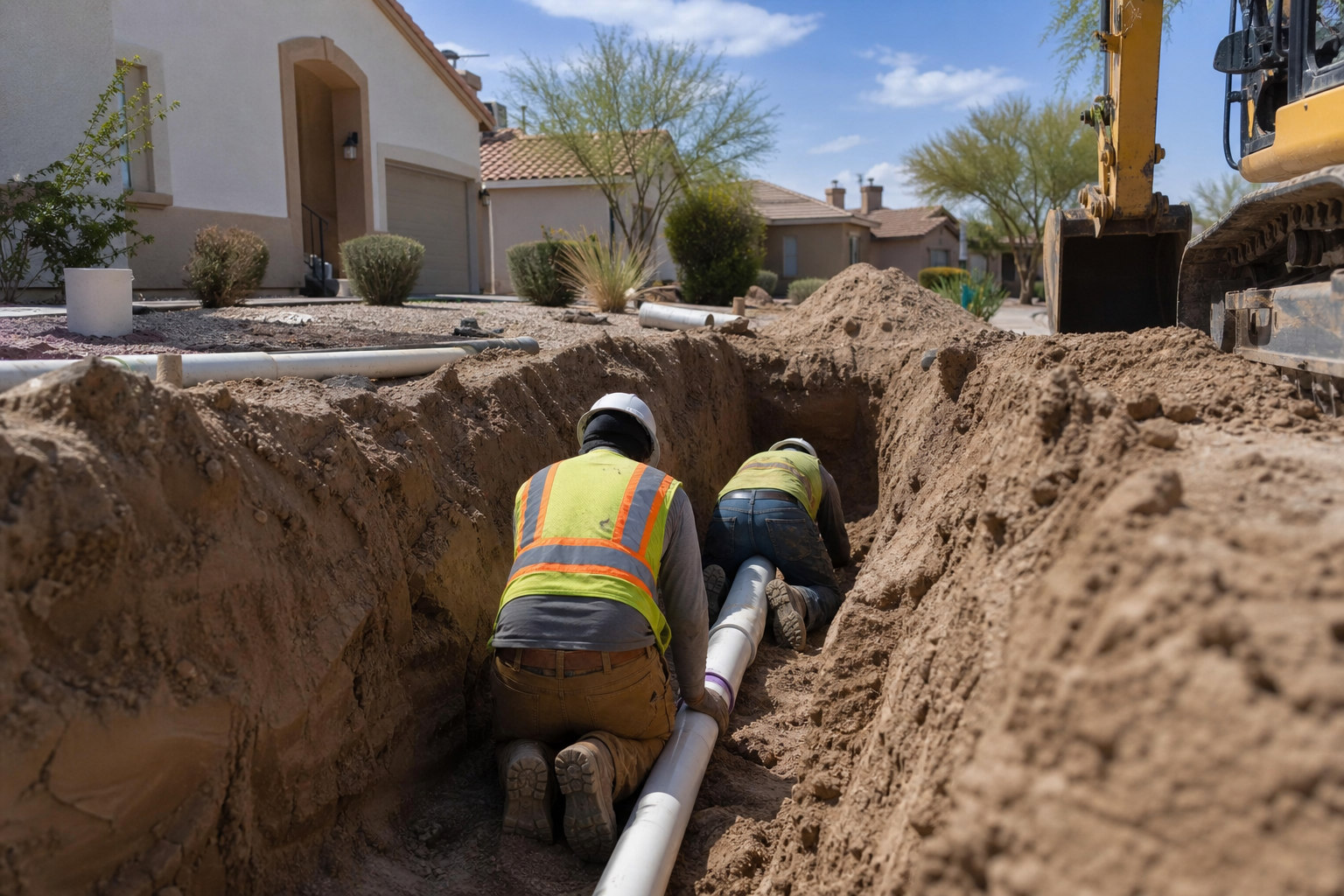
Need Sewer Line Repair in Mesa? Let's Fix It.
Mesa Sewer Line Repair responds to calls across Mesa and the East Valley. Camera inspection, same-visit diagnosis, and the equipment to handle whatever we find.