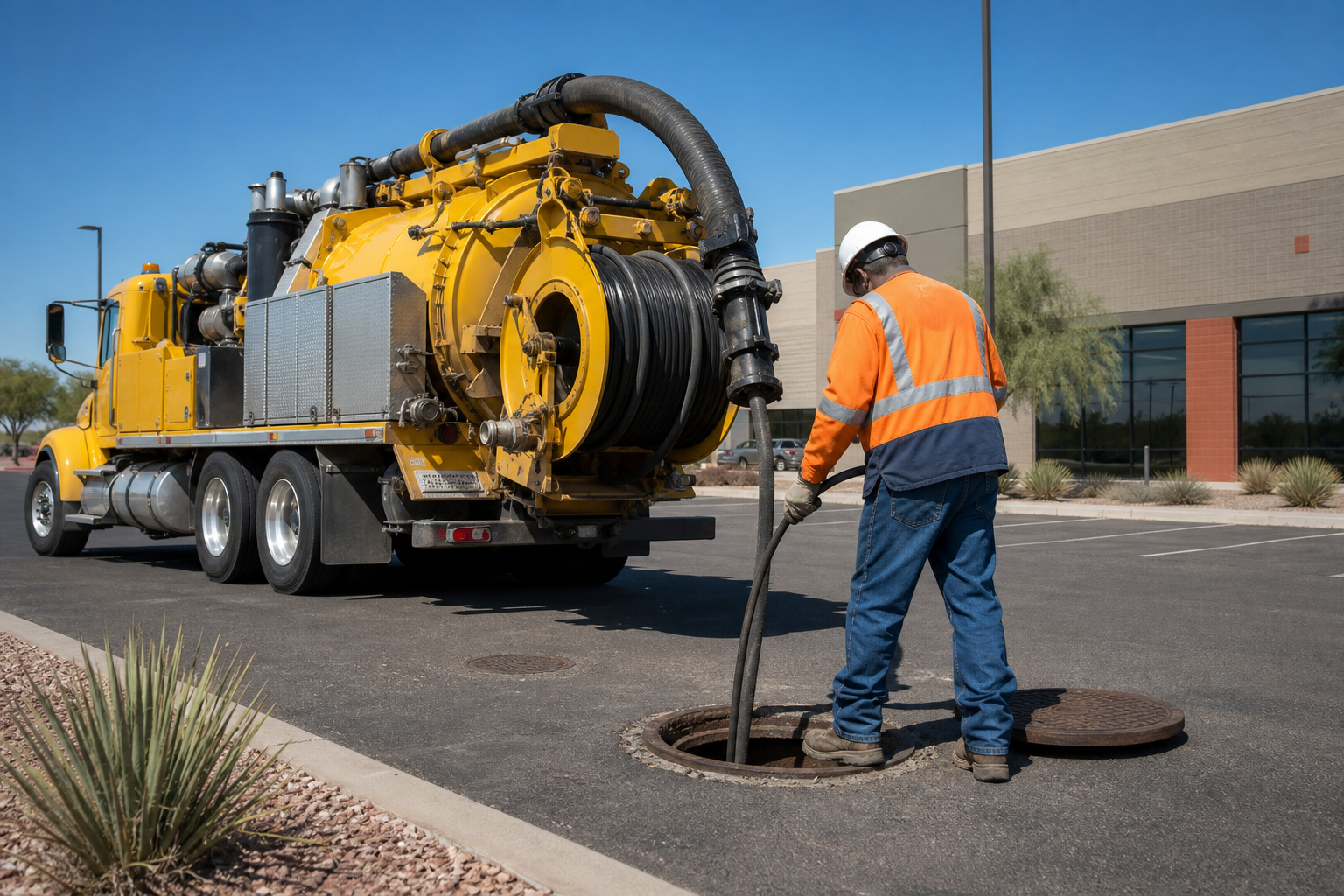
Hydro Jetting in Mesa, AZ
High-pressure water blasting that clears grease, scale, and roots.
A drain snake is a tool for moving a blockage. Hydro jetting is a tool for removing it. The difference matters because most drain lines that repeatedly back up aren't just blocked — they have a long history of buildup that a snake punches through and leaves behind. The snake clears enough of the obstruction to get the line flowing, and 90 days later it's back. Hydro jetting removes the buildup from the pipe walls, cuts through root mass, and clears scale and grease deposits that have been narrowing the effective pipe diameter over months or years.
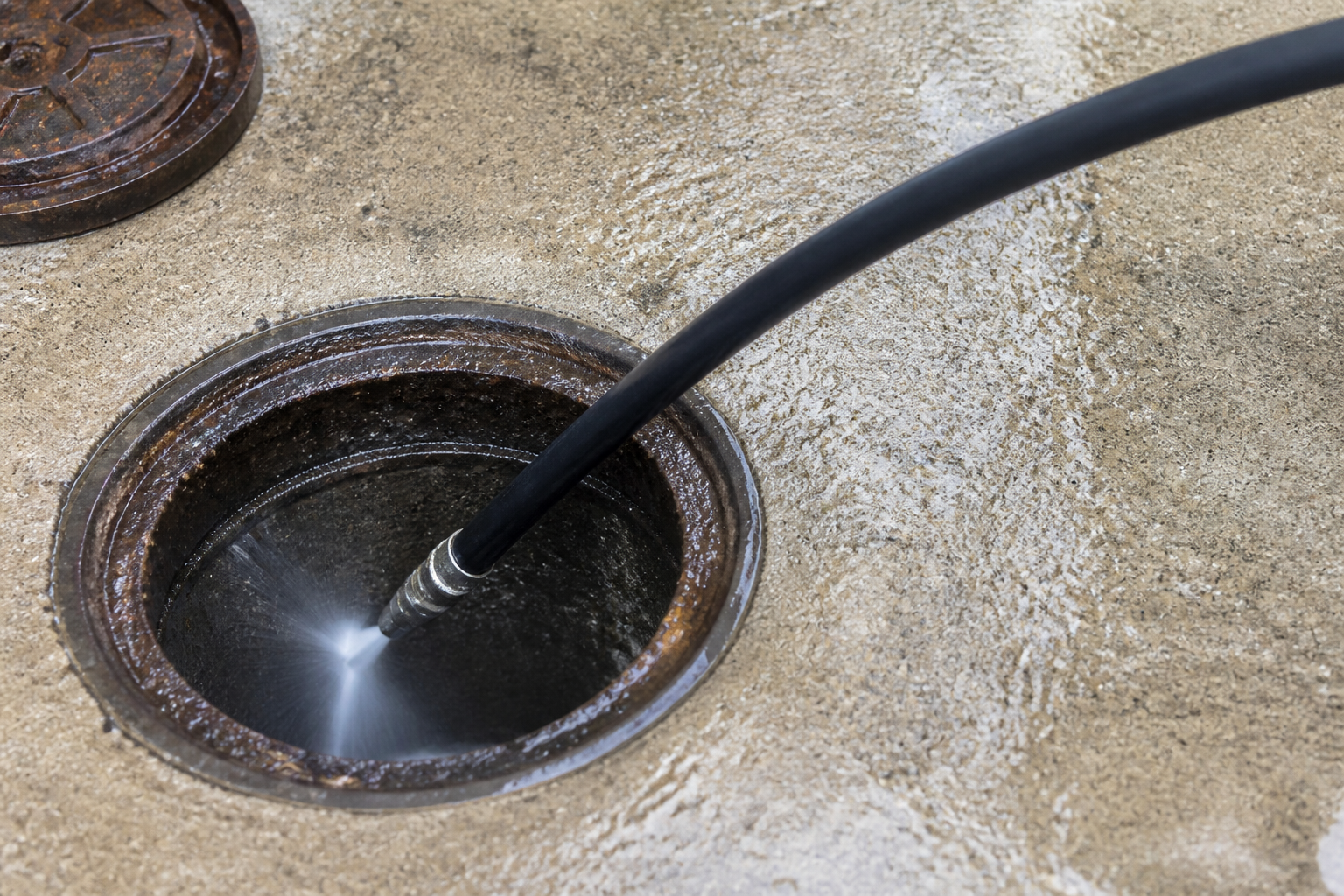
Our jetting equipment runs at 3,000 to 4,000 PSI with flow rates up to 18 gallons per minute. At that pressure, the rotating nozzle scours the full circumference of the pipe interior from 4-inch residential laterals through 10-inch commercial mains. Grease columns that have solidified against the pipe walls are cut loose. Root mass — fibrous or mature — is sheared by the spinning nozzle and flushed downstream. Calcite and mineral scale that's been building since the pipe was installed is broken up and cleared. When we pull the hose back out, the pipe looks different on the post-jetting camera pass — we can see the pipe wall material clearly instead of looking through a layer of buildup.
Hydro jetting is the standard maintenance solution for restaurant and commercial kitchen drain lines. A commercial kitchen sewer line accumulates grease, food solids, and suspended fats at a rate that makes snaking a temporary fix at best. FOG (fats, oils, and grease) that enters the drain from cooking and dishwashing operations solidifies against the pipe walls, building up until flow is restricted. For most restaurant lines, quarterly or semi-annual jetting is the maintenance cycle that keeps the line from backing up during service. We schedule recurring maintenance visits for restaurant clients on whatever cycle their drain volume requires.
We always camera the line before jetting when the root cause of a problem is unknown. Hydro jetting at 3,500 PSI on a pipe that's already structurally compromised — a pipe belly that's holding standing water, a severely offset joint, or a section that's partially collapsed — can cause damage. The pre-jetting scope confirms the pipe can handle the pressure before we run the hose. After jetting, we camera again to document pipe condition and confirm the line is clear. That post-jetting footage is also what tells us whether the buildup was the problem or whether there's an underlying structural issue that jetting alone won't fix.
What's included
- 3,000–4,000 PSI jetting with rotating nozzles rated for 4" through 10" pipe
- Clears FOG buildup, calcite scale, root mass, and accumulated solids
- Pre-jetting camera inspection to confirm pipe structural condition
- Post-jetting camera pass to document pipe condition and confirm line is clear
- Residential laterals and commercial mains — same equipment, same crew
- Recurring maintenance scheduling for restaurants and commercial kitchen lines
- Available after-hours and early mornings for commercial properties in service
When hydro jetting is the right solution
How hydro jetting works
Pre-jetting scope
We camera the line to confirm the pipe is structurally capable of handling jetting pressure and to identify the type and extent of buildup.
Nozzle selection
We select the appropriate nozzle for the pipe diameter and the type of obstruction — a rotating chain-flail for scale, a penetrating nozzle for root mass, a flat-beam nozzle for FOG.
Jetting
The hose is advanced through the line with the nozzle running. The operator works the hose back and forth at problem areas until the buildup is cleared. Full pipe coverage, not just a path through the center.
Post-jetting scope
We camera the line again. The footage confirms the line is clear and documents the pipe's current condition. You see the before and after.
Common questions
Is hydro jetting safe for older clay or cast iron pipes?
We scope first specifically to check pipe condition. Intact clay and cast iron can handle standard jetting pressure. Pipes with active cracks, severe offset joints, or structural deterioration may need a lower-pressure approach or repair before jetting. We make that call on the camera footage, not a general assumption.
How often do restaurants need their drain lines jetted?
It depends on volume and menu. High-volume full-service kitchens with significant fry operation typically need quarterly jetting. Lower-volume or limited-cooking operations may go 6 months between sessions. We assess the grease load on the first visit and recommend a maintenance cycle from there.
Will hydro jetting fix a root problem permanently?
Jetting clears the root mass so the line flows — but it doesn't seal the entry points. If roots are entering through cracked joints, they'll re-grow into those same openings. A permanent fix for root intrusion is either chemical treatment (copper sulfate or foaming agent) to slow regrowth, or pipe lining to seal the entry points entirely.
Recurring drain problem that keeps coming back? Call Mesa Sewer Line Repair and we'll scope the line first to figure out what's actually in the pipe, then jet it clean if that's what the footage shows.
Free Assessment
Camera scope with every diagnosis call. We tell you what's wrong before we quote.
(480) 351-4741Text UsOther Solutions
Need Sewer Line Repair in Mesa? Let's Fix It.
Mesa Sewer Line Repair responds to calls across Mesa and the East Valley. Camera inspection, same-visit diagnosis, and the equipment to handle whatever we find.